A budget inflatable tent is a car-camping shelter with air beams instead of a pole puzzle. Under $300 you can get a tall family shape. You cannot get a four-season mountain tent, and you should not expect one. This guide is a research comparison of common types and the specs worth reading on the listing. It is not a record of nights we slept in them. The hands-on box stays empty until that changes.
Who it is for
Buy in this range if you drive to the site, the backyard, or a field, and you want walls you can stand near. Skip it if you walk more than a short carry from the car. These bundles are heavy, and the pump is another object. Skip it if the forecast is a real wind. Large panels are sails.
If you are deciding whether to save toward a $400 established-brand cabin instead, read the price-tier comparison before you treat $300 as the ceiling you must hit.
What to look for
Start with the floor, not the person count. A “6-person” tent is often four sleepers plus kit. Look for a floor near 3 by 3 metres if you want a family to lie down without playing tetris, and for a sewn-in groundsheet so the tub is one piece.
Then the fly. A fly that stops above the beams lets water run into the seams. You want overlap. You also want guy points you will actually stake. An air tent that is only pegged at the corners will move.
Pumps are the quiet extra. Some listings include a hand pump, some an electric pump, some a picture of a pump that is not in the box. Add the pump price before you decide the tent is under $300.
Windows: PVC looks bright and scratches if you pack it sandy. Mesh that cannot close is a cold night. Dark fabric helps you sleep and heats the tent at noon. Neither is a moral victory.
Read shipping and returns before you order a bundle this large from overseas. A tent that misses the weekend and then costs a fortune to send back is not the cheap tent.
The shortlist
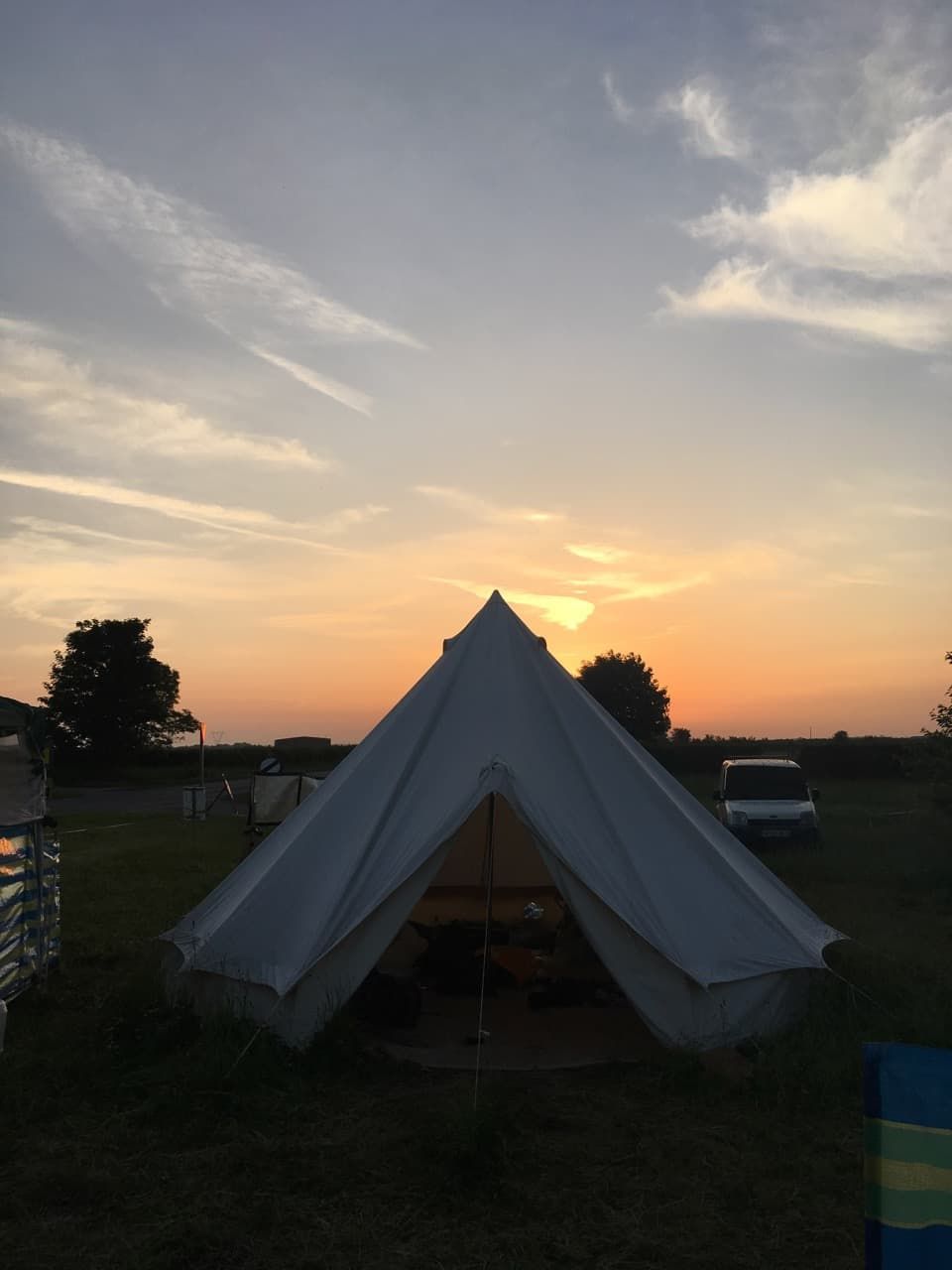
Pick 1
6-person air tent with a panoramic PVC roof
Best for. Families who drive to the site and want headroom
This is the familiar tall budget glamping shape. Check that a pump is included and that the fly actually overlaps the beams.
Look for
- Floor near 3 by 3 m
- Sewn-in groundsheet
- Fly that covers the main seams
Strengths
- Standing room near the middle
- Daylight from the clear panel
Limits
- Heavy, so it stays in the car
- PVC scratches if packed sandy
Fair-weather family shelter, not a storm tent.
$200–280
Check the current price.
Check price for 6-person air tent with a panoramic PVC roof (opens in a new tab)
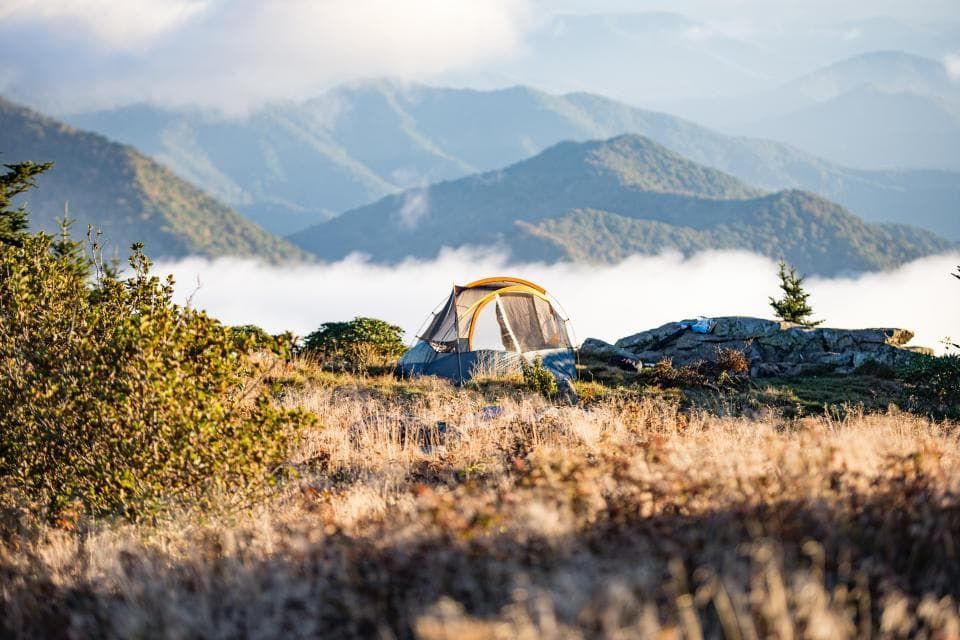
Pick 2
4-person air-beam tent with a dark bedroom
Best for. Couples who want a quicker pitch and less glare
A four-person air tent is the saner buy if you are not actually sleeping six. Look for a stated hydrostatic head and taped seams.
Look for
- Two sleeping areas or a dark inner
- Separate living space if you can find it
- Repair patches in the bag
Strengths
- Dark fabric helps morning sleep
- Fewer people means less condensation argument
Limits
- A dark roof is hotter at noon
- Air beams still need a top-up
Dark coating is not insulation.
$160–240
Check the current price.
Check price for 4-person air-beam tent with a dark bedroom (opens in a new tab)
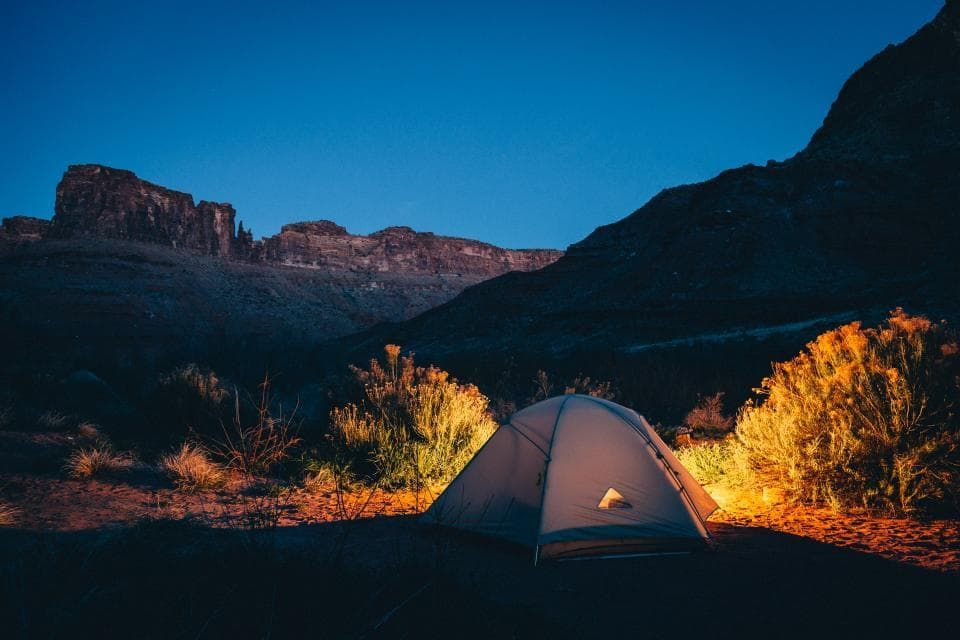
Pick 3
Tunnel air tent with a front living porch
Best for. Cook-in-the-porch weekends when rain is likely
Choose a tunnel when the pitch is long and you want a dry place to sit. Measure the listed length against the site, not the photo.
Look for
- Porch deep enough for two chairs
- Bedroom that zips off
- Guy lines that reach real stakes
Strengths
- Wet gear stays out of the bedroom
- Long shape fits a narrow pitch
Limits
- Needs more length than a dome
- Crosswinds push the long side
Stake every guy point. A porch without tension is a sail.
$180–270
Check the current price.
Check price for Tunnel air tent with a front living porch (opens in a new tab)
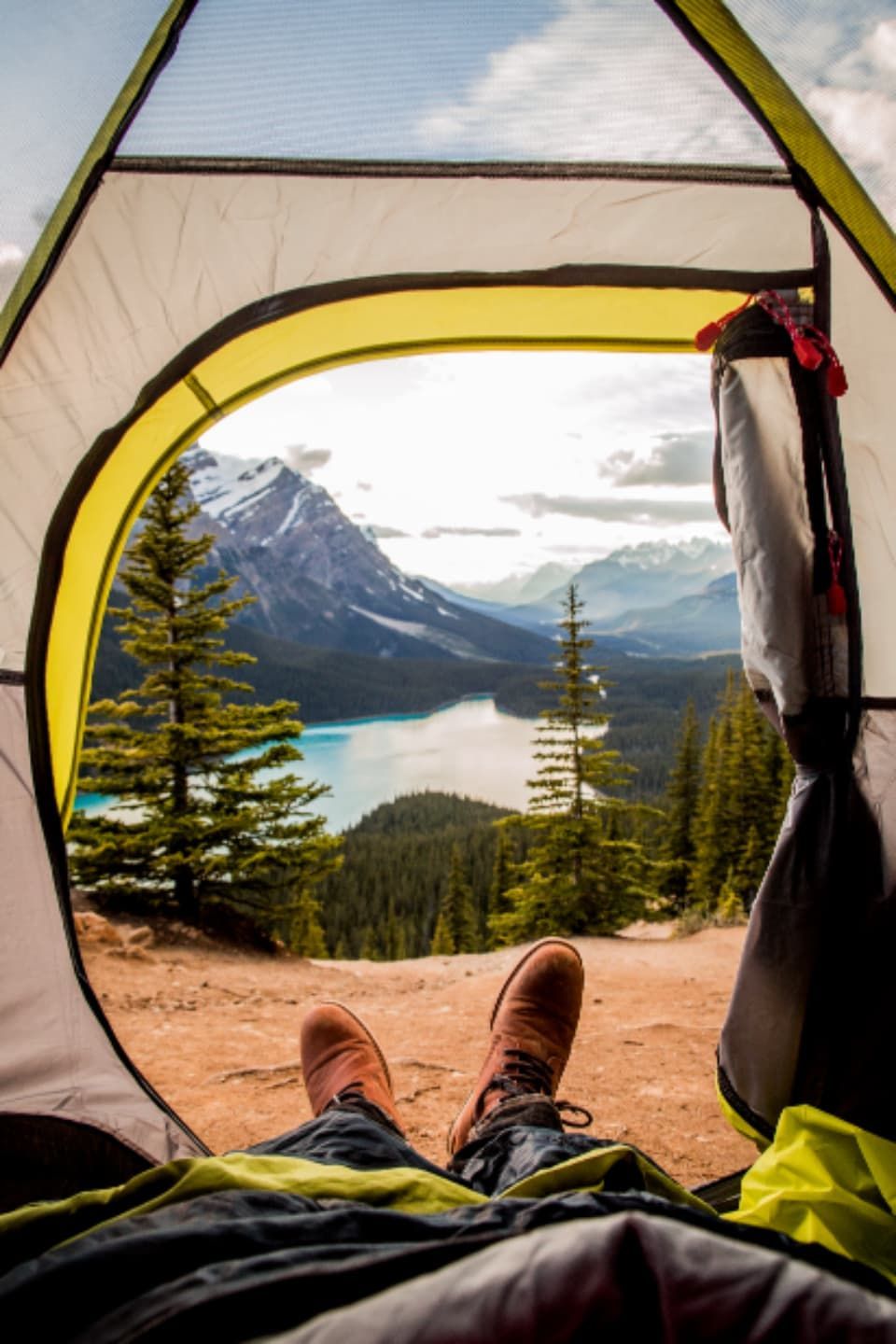
Pick 4
Cabin-style tent with PVC windows and air poles
Best for. Backyard or calm campsite use, not a ridge
Cabin walls are the comfort. They are also the wind problem. Read the stake count and plan to use all of them.
Look for
- Near-vertical walls
- Windows that close, not only mesh
- A stated packed weight
Strengths
- Feels like a room when the air holds
- Easier to dress in
Limits
- Large panels catch wind
- Windows cloud if folded dirty
Do not leave it up unstaked because the yard 'felt still.'
$190–290
Check the current price.
Check price for Cabin-style tent with PVC windows and air poles (opens in a new tab)

Pick 5
Tent footprint sized to the floor, sold separately
Best for. Anyone keeping a budget tent for more than one season
Many air tents omit a footprint. Buy one that stops short of the edge. It is the least glamorous thing that extends the floor.
Look for
- Cut smaller than the floor so water does not pool
- Same brand family or a listed size
- No extra tail that sticks out
Strengths
- Saves the floor from abrasion
- Cheap compared with a new tent
Limits
- A too-big sheet feeds water under you
- One more thing to pack
If the footprint is larger than the floor, trim the idea, not the tent.
$25–45
Check the current price.
Check price for Tent footprint sized to the floor, sold separately (opens in a new tab)
If you are two people, do not buy the six-person panoramic because the photo looks like a room. The four-person air tent is the more honest volume. Buy the footprint unless the tent already includes one that stops short of the floor edge.
The material argument, without a pretend sleepover, is in the four-type comparison. Chairs and a table, if the tent is only the shelter, are in the folding furniture guide.
What usually disappoints
Condensation is normal in a sealed budget tent with people breathing. Vent it. A wet wall in the morning is not automatically a leak. A drip at a seam during rain might be.
Beams soften. Plan a top-up. If a beam will not hold for an evening, that is a return, not a character-building exercise.
Zips are the other cheap part. Open them with two hands. Do not yank a door that is loaded with fabric.
Alternatives
A poled dome under $160 is lighter and duller and often the better tool. A borrowed tent is the correct choice for one weekend a year. If the site is windy and exposed, neither a $200 air tent nor a $300 air tent is the right category. Pay for a lower-profile tent from a company that sells spare poles, or stay home.
Common questions
Is $300 enough for a family?
For calm car camping, often yes, if you believe the floor size and you stake it. For a windy coast or a week of weather, no. The budget buys space, not a rescue.
Do I need an electric pump?
You need a pump you will use twice a day if the beams sigh. Electric is kinder. Manual is fine if the volume is small. Price it in.
Can I leave it up all summer in the yard?
Only if it is staked, watched for wind, and you accept UV and mold. These are not garden rooms. Dry it before you pack it, or the next trip starts with a smell.