The useful question is not “is cheap embarrassing.” It is which problems you are paying to avoid. Around $200, an inflatable tent buys a large floor and air beams. Around $400, an established-brand cabin often buys a fly designed as a system and a place to get a spare part next year. This piece compares those tiers from what listings and repair realities usually show. It is not a side-by-side night, and it does not score a named model. No brand here has been “tested” by us.
Who it is for
Read this if you are paused between a marketplace air tent and saving up. If you already want the budget air tent and you want shapes, use the under-$300 guide and the shape comparison. If you camp once a year in calm weather, the $200 tier can be rational. If you camp in wind, or you hate replacing things, the $400 tier is about the company as much as the cloth.
What the money tends to buy
At about $200 you are paying for volume. The fly may be short. The pegs may be soft wire. The pump may be a hand pump that makes you resent the tent. The warranty may be a seller message. None of that means the tent cannot work on a fair weekend. It means the failure parts are the ones you will meet first: zips, seams, beams that need a top-up, pegs that bend.
At about $300, sometimes you are looking at the same tent with a taller photo, and sometimes the fly actually covers the beams and the pegs are longer. Read the fly. If you cannot see a difference in coverage, do not pay the middle price for a color.
Around $400 at an established camping brand, you are often paying for a parts pipeline, a published spec, and a fly that was drawn with the tent. You are not paying for dry air inside. Condensation still happens because people breathe. You might be able to see the tent in a shop, which is a way to check height without trusting a wide-angle photo.
A poled tent near $200 is the third option people forget. No pump. Less theater. A pole can still break, so the question is whether a spare section exists.
The tiers
Pick 1
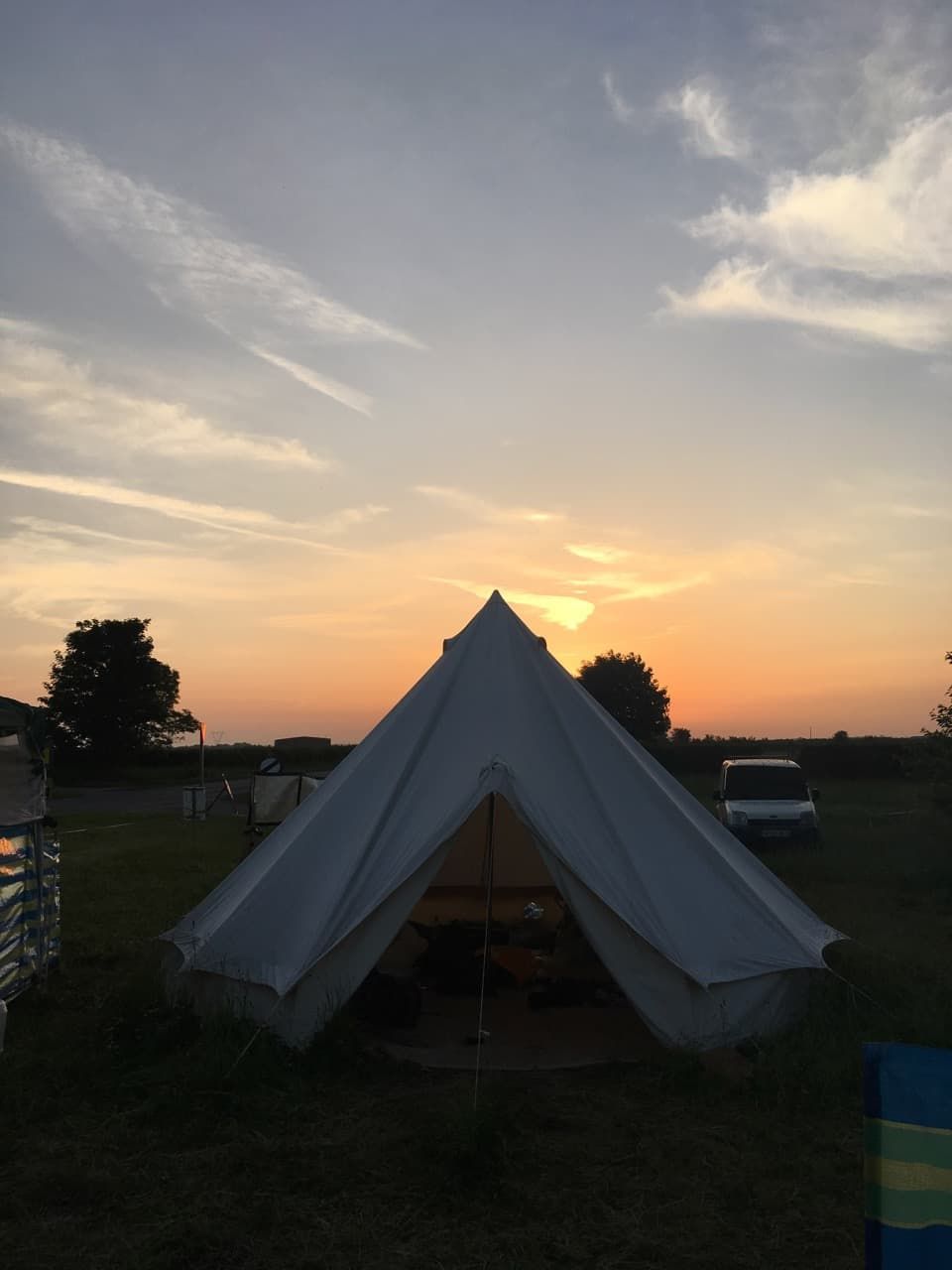
Typical $200 inflatable family tent
Best for. A first air tent you can afford to learn on
Around $200 you are paying for air beams and a big floor, not for a storm pedigree. Expect to seam-seal nothing you were not told to, and to replace it sooner.
Look for
- Single-wall or simple fly
- Manual pump often, electric sometimes
- Limited warranty language
Strengths
- The price of a lesson
- Enough tent for calm car camping
Limits
- Zippers and seams are the cheap parts
- Support is a listing, not a shop
Buy it as a fair-weather tent with a repair kit.
$180–230
Check the current price.
Check price for Typical $200 inflatable family tent (opens in a new tab)
Pick 2
Typical $300 inflatable with a better fly
Best for. Someone who will use it several weekends a year
The step from about $200 to about $300 is sometimes a real fly and sometimes a taller photo. Read the fly coverage before you pay the difference.
Look for
- A fly that covers beams
- Stronger peg set
- A pump you will actually use
Strengths
- Less 'why is the seam wet'
- Still far under prestige prices
Limits
- Still not a four-season tent
- Weight remains a car problem
The extra hundred should show up as fly, pegs, and zips, not a new color.
$270–340
Check the current price.
Check price for Typical $300 inflatable with a better fly (opens in a new tab)
Pick 3
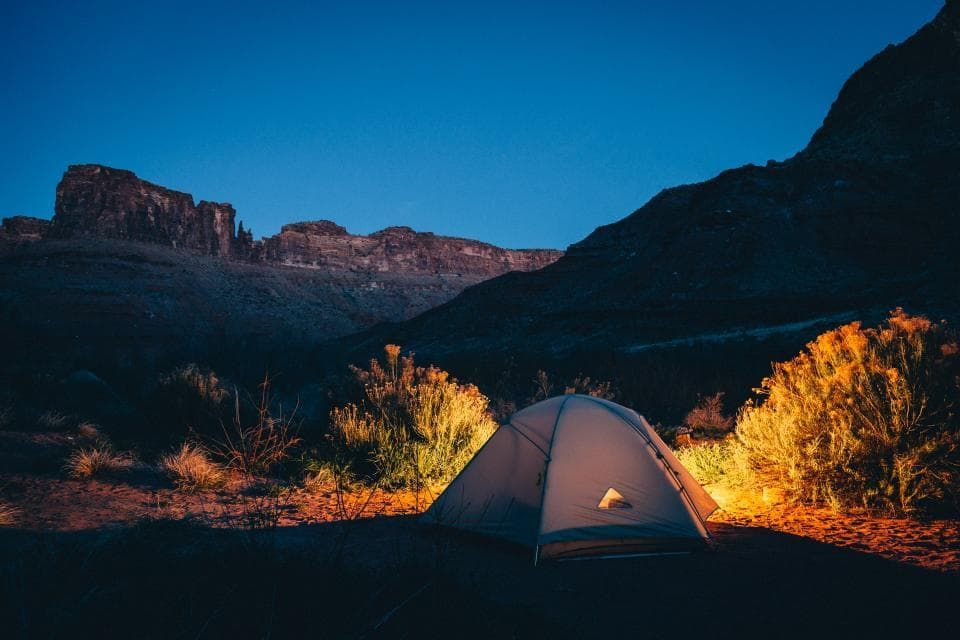
Poled cabin or dome around $200
Best for. People who would rather tension poles than chase a leak
A poled tent at this price is the honest alternative. You trade the five-minute pitch for fewer ways the structure can sigh overnight.
Look for
- Full fly
- Pole sleeves or clips shown
- A floor you can patch
Strengths
- No pump, no slow leak
- Easier to dry a pole tent's logic
Limits
- Slower pitch
- Less 'room' for the money
Poles still break. Pack a splint or a spare section if the brand sells one.
$160–230
Check the current price.
Check price for Poled cabin or dome around $200 (opens in a new tab)

Pick 4
Established-brand cabin tent around $400
Best for. Someone comparing repair networks and resale, not a logo
The $400 tier usually buys a parts pipeline and a fly designed as a system. It does not buy immunity from condensation. Decide if that pipeline is worth the gap.
Look for
- A company that sells spares
- Clear warranty terms
- Published trail weight or packed size
Strengths
- Parts exist next year
- You can often see the tent in a shop
Limits
- You pay for the system, not only the fabric
- It can still wet out if you pitch it badly
We are not reporting a lab result against any named model.
$360–480
Check the current price.
Check price for Established-brand cabin tent around $400 (opens in a new tab)
A way to decide
Choose the $200 air tent if the trips are few, the weather is mild, you have a car, and replacing it in two or three seasons would not anger you. Bring a repair kit and a footprint smaller than the floor.
Choose the $400 tier if you will use it often enough that a dead zip with no spare is the expensive outcome, or if you want to reject the tent in person before a holiday. Do not choose it because a logo feels safer in a storm. Leave the storm.
Choose the poled tent if the pitch ritual does not bother you and you would rather not manage air pressure.
If the tent is coming from overseas, the return math can erase the $200 advantage. A $400 tent you can return to a shop may be the cheaper mistake. That is the unglamorous part of “worth it.” More of it is in the overseas ordering guide.
What we are not saying
We are not saying every $200 tent leaks and every $400 tent does not. Pitch, site, and care decide a lot of wet mornings. We are not saying a marketplace tent is unsafe by category. We are saying the support around it is thinner, and the photo is a weaker promise.
Common questions
Can a $200 tent last several seasons?
Yes, if you stake it, dry it, and do not store it wet or dirty. The beams and zips are still the parts to watch. “Several” might be three gentle seasons, not a decade.
Is the name brand twice as waterproof?
We do not have a number for that, and we will not invent one. Look at fly coverage, taped seams, and whether the floor is a tub. Those are visible. A single hydrostatic-head figure without context is not a comparison.
Should I wait for a sale?
A sale on the $400 tent can close the gap. A sale on a $200 tent that still has no fly coverage does not change the shape. Buy the tier you picked, not the discount that arrived first.